






No sign-up · Free

Ask a whole YouTube channel, not a single video

Video summarisers read one video. TubExperto has watched every video on the channel: ask anything and each answer takes you to the exact second where it is said.

Pick a channel and ask

QuantumFracture

Science · 10 videos indexed · Physics and astronomy, explained with rigour and humour.

Questions already asked to QuantumFracture

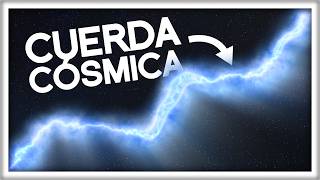
›What are cosmic strings and how could we detect them?

Cosmic strings are extremely thin, ultra‑massive topological defects that could have formed in the first instants of the universe, stretching across cosmological distances while carrying a huge amount of energy per unit length (tension) ▷ 0:22. Because their tension precisely balances their mass, a static, straight string does not pull nearby objects gravitationally, but it does curve space‑time, creating an angular deficit: a full circle around the string encloses slightly less than 360° ▷ 9:35.

Several observational strategies have been proposed to detect them:

  • Gravitational‑lensing signature – a straight, static cosmic string would produce two identical, undistorted images of a background galaxy separated by the angular deficit. Early‑century candidates were examined, but the “Hubel” telescope showed the objects were independent galaxies ▷ 14:48. This lensing effect is distinct from the distorted arcs produced by massive lenses.

  • Cosmic‑microwave‑background (CMB) temperature step – a moving string would generate a discontinuity in the CMB colour, with a slight redshift on one side and a blueshift on the other. Precise CMB measurements have so far found no such step ▷ 13:21.

  • Stochastic gravitational‑wave background – oscillating string loops emit bursts of gravitational waves; a network of strings would contribute to a diffuse gravitational‑wave background. The Nanogra collaboration reported a background detection in 2023, which could be compatible with strings but also with other sources ▷ 13:21.

  • Future gravitational‑wave observatories – next‑generation detectors such as LISA, the Einstein Telescope, and the Square Kilometer Array (which will perform observations similar to Nanogra but with higher precision) could test the string hypothesis by searching for the characteristic burst or background signals ▷ 16:51.

Non‑detections in lensing, CMB, and current gravitational‑wave data have already placed increasingly tight limits on the strings’ tension, indicating that if they exist they cannot be too massive ▷ 16:51.

›Could aliens on another star see us?

Aliens could potentially see us, but it would be very difficult and would depend on the technology they have.

The video first raises the idea that we might be “the noisy neighbour” that other civilizations could notice ▷ 0:00. It then explains several ways an alien civilization might detect Earth:

  • Reflected light and heat signatures – By measuring the light reflected from a planet they could distinguish oceans from continents and even spot hotter “islands” that might correspond to cities or artificial illumination on the night side ▷ 11:10.
  • Radial‑velocity wobble – The tiny gravitational pull of Earth on the Sun creates a wobble of about 9 cm s⁻¹; instruments that can detect a similar signal elsewhere would make Earth a detectable target ▷ 4:18.
  • Artificial radio leakage – Our everyday radio emissions (e.g., 4G) could be seen up to ~4 ly, while powerful radar bursts (like those from the former Arecibo transmitter) might be detectable out to ~12 000 ly with technology comparable to ours ▷ 15:58 ▷ 12:17.
  • Orbital structures – Large satellite constellations (the “Clarke belt” at ~36 000 km) could leave a detectable imprint in the star’s light during a transit, though current numbers of satellites are still too low; in a few centuries the effect might become noticeable ▷ 12:17.
  • Direct imaging – Future space telescopes such as NASA’s “Habitable Worlds” or ESA’s “Life” concept could directly image Earth‑like planets by suppressing the host star’s glare; an alien civilization with similar capabilities could use this method to study Earth’s atmosphere and surface ▷ 8:45.

Even if an alien detected a signal, they would likely know only the direction, not the exact distance, making a response challenging ▷ 17:44. In summary, the video outlines that while detecting Earth is plausible through reflected light, radio leakage, orbital signatures, or advanced direct‑imaging techniques, it remains a demanding task for any extraterrestrial observer.

›Why did the Big Bang have to be discovered several times?

The Big Bang had to be “discovered” three times because each successive attempt provided the missing observational evidence that earlier versions lacked.

  • At first the idea appeared in the 1940s but the model could not explain everything, so it was abandoned and later revived ▷ 0:52.
  • Early attempts ran into conceptual problems (e.g., the notion of an infinitely small point and the need to go beyond classical relativity) that forced physicists to reconsider the model ▷ 8:48.
  • Competing ideas such as the steady‑state theory, championed by Fred Hoyle, offered an alternative that avoided a singular beginning, but required the ad‑hoc creation of matter and could not account for certain element abundances (the “triple‑alpha” process) ▷ 14:53.
  • The decisive third discovery came with the detection of the cosmic microwave background, which the steady‑state model could not naturally explain, allowing the Big Bang to become a precise, observationally‑driven cosmology ▷ 24:35.

Thus, the theory was “rediscovered” each time new data (expansion of space, element abundances, and the background radiation) resolved previous shortcomings and finally cemented the Big Bang as the leading description of the universe’s origin.

Each ▷ timestamp plays that exact second of the video it comes from.

Ask your own question

A few free questions per person, no sign-up. A free account gives you many more and lets you add your own channels.

One video, four ways to read it

¿Existen Fisuras en el Universo?

The channel is in Spanish; so is this analysis. With an account you get it in English.

El vídeo explora la intrigante posibilidad de que el universo contenga fisuras o defectos topológicos, conocidos como cuerdas cósmicas, formados durante las transiciones de fase en el cosmos primitivo. Explica cómo la ruptura de simetría, similar a la formación de grietas en el hielo al congelarse, pudo haber creado estructuras energéticas masivas. Aunque inicialmente se consideraron responsables de la formación de estructuras galácticas, fueron descartadas por la teoría de la inflación. Sin embargo, su conexión teórica con las supercuerdas y la reciente detección de ondas gravitacionales han renovado el interés científico en su búsqueda mediante telescopios avanzados.

Key takeaways

  • Las cuerdas cósmicas son defectos energéticos teóricos que actúan como cicatrices del universo primitivo.
  • La detección de ondas gravitacionales es actualmente la técnica más prometedora para confirmar la existencia de estas fisuras.
  • Aunque no se han observado directamente, la búsqueda continúa porque su existencia validaría teorías fundamentales sobre la unificación de fuerzas.
  • La ciencia actual descarta que estas cuerdas sean las responsables únicas de la formación de galaxias, gracias a la teoría de la inflación.

Key moments, to the second

  • ▷ 2:38Analogía con el hielo para entender defectos
  • ▷ 4:44La función de los campos escalares
  • ▷ 10:30Propiedad antigravitatoria de las cuerdas
  • ▷ 11:37El papel de la inflación cósmica
  • ▷ 12:21Posible conexión con las supercuerdas
  • ▷ 16:56Importancia de los futuros observatorios

Expert panel: one question, several channels

Each channel answers from its own videos, with its own citations. Compare angles without opening ten tabs.

«How will artificial intelligence change our work?»

Artificial intelligence

Dot CSV

Artificial intelligence will transform work by giving a decisive competitive edge to those who adapt quickly ▷ 22:35, by reshaping every layer of software—not just browsers or search—so that entire categories of applications are redefined ▷ 35:21. It is already being used to accelerate critical sectors such as biotechnology, where AI helps design new drugs ▷ 11:11, and to generate new scientific knowledge autonomously, turning research into a rapid, data‑driven process ▷ 16:45.

In software development the shift is from simple autocomplete to “agentic” AI that can execute complex tasks autonomously; a few minutes of AI work now translates into hours saved for humans ▷ 2:04. This same automation extends to routine office tasks—drafting emails, filling documents, writing scripts—while still requiring human oversight ▷ 1:30:35.

The broader impact includes societal applications like disaster‑relief logistics ▷ 2:10:04 and the emergence of new challenges such as large‑scale disinformation, which will require new safeguards ▷ 1:30:35. Overall, AI is moving from a supportive tool to a core collaborator that can both accelerate productivity and reshape how work is organized across industries.

Psychology and wellbeing

Alex Fidalgo

Artificial intelligence will make work faster and shift the value of human effort toward tasks that add real societal value, while automating low‑value, repetitive activities.

  • The speaker says the coming AI wave will “make everything go faster … not only cars and bicycles but also the human mind” and that this speed‑increase will be felt across companies ▷ 1:20:45.
  • Jobs that depend only on manual effort or on pressing a button are the first to be at risk; workers who do not reskill will be most affected ▷ 1:07:28.
  • Studies cited in the video estimate “170 million jobs created thanks to artificial intelligence by 2030 and 70 million jobs eliminated” ▷ 1:07:28, indicating a net gain but also a restructuring of the labour market.
  • The AI that will be widely used in the near term is narrow (ANI); tools like ChatGPT belong to this category and excel at single‑purpose tasks such as generating podcast episode descriptions from a transcript, “understanding the conversation, extracting key points and producing a faithful description” ▷ 1:54:11.
  • Professionals can integrate AI to handle peripheral tasks—e.g., an AI “agent” that checks Slack hourly and alerts only when something important occurs, reducing mental noise ▷ 1:44:10.
  • The speaker argues that the human, emotional component of work will remain essential; the contact and empathy required in many roles cannot be fully replicated by AI, so the “human contact in work will continue to be necessary” ▷ 1:08:31.
  • By 2030 the industry expects language models that approach general AI, but the exact impact is still uncertain; what is clear is that anyone who adds “close to zero value to society” will see their role questioned, while those who adapt and add value will stay relevant ▷ 1:18:09.

In short, AI will accelerate processes, automate low‑value tasks, create many new roles, and push workers to upskill and focus on high‑value, human‑centric activities.

What a video summariser does not do

The whole channel, not one video

It searches hundreds of hours from the same creator and connects what they said across videos.

Citations to the exact second

Every claim carries its timestamp: check the source in one click.

It keeps learning

When the channel publishes, the expert picks it up. Tomorrow’s questions already include today’s video.

Where you already work

Web, iOS and Android apps, a YouTube extension and your own AI through MCP.

Use it from your own AI (MCP)

The same channels, from Claude, ChatGPT, Cursor or VS Code. The demo connector needs no key.

Demo connector URL (no account):

https://mcp.tubexperto.com/demo

In Claude Code:

claude mcp add --transport http tubexperto-demo https://mcp.tubexperto.com/demo

The demo connector gives short answers over the free catalog. With a free account you connect https://mcp.tubexperto.com and your AI reaches your own channels, full answers and every tool. Step-by-step guide

Do the same with the channels you follow

A free account lets you add your own channels, gives you more questions every week and keeps your conversations. No card needed.

Create your free account