
AI for Videos: TubExperto vs ChatGPT - Key Differences That Matter
ChatGPT is probably the most impressive AI most of us have ever used.
Let's start with honesty: OpenAI has created something extraordinary. ChatGPT can write code, analyze documents, generate creative ideas, explain complex concepts, and yes, it can also work with YouTube videos through plugins and the Plus version.
So why would you need another tool for videos?
This is exactly the question we ask ourselves constantly. And the answer isn't "because TubExperto is better than ChatGPT." It's more nuanced: they're different tools designed for different problems.
Let's prove it with real tests, not marketing.

Comparing AI tools for video requires real tests, not just technical specifications
The Honest Test: Same Video, Both Tools
For this comparison we used a real video: a 2-hour, 15-minute tutorial on microservices architecture from a popular tech channel.
Question 1: "What communication pattern does he recommend between services?"
ChatGPT (with video plugin):
"The video discusses several communication patterns between microservices. The creator mentions REST APIs, message queues, and event-driven architecture. He recommends evaluating the project's specific needs to choose the right pattern, considering factors like latency, coupling, and complexity."
TubExperto:
"The creator specifically recommends message queues for most cases [47:23]. His main arguments:
- Synchronous communication (REST) creates 'fragile dependency chains' [48:15]
- Asynchronous events allow services to fail independently [49:02]
- Practical example with RabbitMQ [52:30 - 58:45]
However, he clarifies that for operations requiring immediate response (like authentication), REST is still valid [1:02:15]."
The difference is clear. ChatGPT gives a correct but generic answer. TubExperto gives the specific answer with exact timestamps and the creator's reasoning.
Question 2: "At what minute does he talk about testing?"
ChatGPT:
"The video covers testing in the middle section. The creator discusses the importance of unit tests, integration tests, and end-to-end tests in microservices architectures."
TubExperto:
"Testing is covered in three sections:
- Unit tests: 1:15:23 - 1:22:45
- Contract tests with Pact: 1:23:00 - 1:31:30
- End-to-end tests and their limitations: 1:32:15 - 1:38:00
The creator especially emphasizes contract tests [1:24:45], calling them 'the missing link that most teams ignore.'"
ChatGPT knows the video talks about testing. TubExperto knows exactly where and what it says in each section.
Question 3: "What did this creator think about Kubernetes in his video from 6 months ago?"
ChatGPT:
"I don't have access to other videos from the creator. I can only analyze the video you've provided."
TubExperto:
"In the video 'Kubernetes in Production - My Real Experience' from 5 months ago, the creator had a more skeptical stance [8:45]:
- He mentioned Kubernetes was 'overkill' for small teams
- He recommended starting with Docker Compose [12:30]
- He warned about the learning curve [15:20]
In the current video [1:45:30], his stance has evolved: he now considers Kubernetes necessary for microservices in production, but maintains his recommendation not to adopt it prematurely."
This is the fundamental difference. ChatGPT analyzes one video. TubExperto analyzes an entire channel, with context memory and the ability to compare opinions over time.

Timestamp precision lets you jump directly to the exact second where each concept is mentioned
Why This Difference Exists (The Technical Explanation)
It's not that ChatGPT is "worse." It's that it's designed for a different purpose.
ChatGPT: The Brilliant Generalist
ChatGPT is a general-purpose language model. When you analyze a video with a plugin:
- The plugin extracts the video transcript
- The transcript is passed to ChatGPT as context
- ChatGPT generates a response based on that text
This approach works well for general questions. But it has structural limitations:
- No persistent indexing: Every time you ask, the video is processed from scratch
- Context limit: Very long videos get truncated or summarized
- No memory between sessions: Tomorrow, ChatGPT doesn't "remember" the video
- One video at a time: It can't naturally compare multiple videos
- Approximate timestamps: Plugins calculate timestamps, but with variable precision
TubExperto: The Video Specialist
TubExperto is built specifically for one thing: making video content as searchable as a database.
The approach is fundamentally different:
- Deep indexing: Each video is processed once and indexed semantically
- Segment-level embeddings: Content is divided into fragments with precise timestamps
- Semantic search: Questions are compared against meaning, not just words
- Full channel memory: All videos from a channel are searchable simultaneously
- Second-accurate timestamps: Not approximate -- exact
It's the difference between having a very smart assistant who can read a document for you (ChatGPT) and having that document indexed in a searchable database (TubExperto).
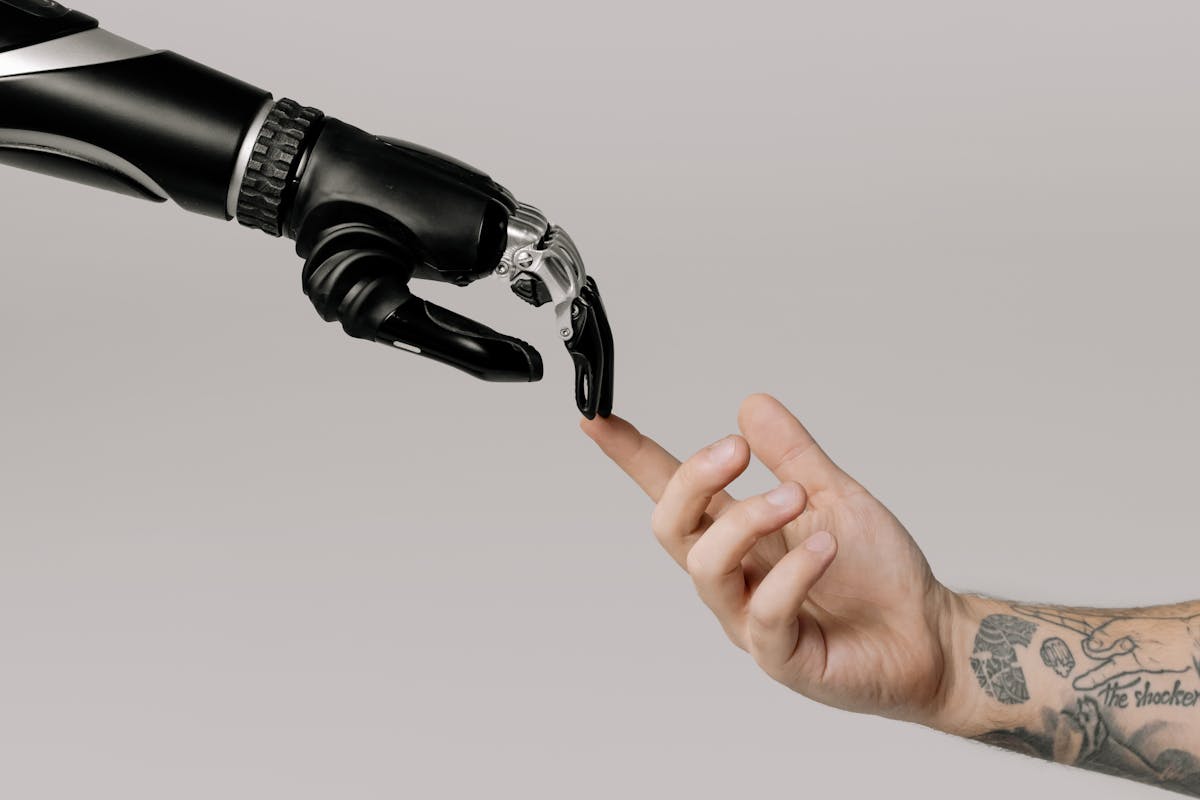
Deep semantic indexing enables searches by meaning, not just keywords
Real ChatGPT Advantages (Being Honest)
TubExperto doesn't replace ChatGPT. There are things ChatGPT does better:
1. Total Versatility
ChatGPT can analyze a video, then help you write code based on what you learned, then summarize that code into an email, then translate the email into Japanese.
TubExperto does one thing: query YouTube videos. Very well, but only that.
2. Immediate Single-Video Analysis
If you just need to understand one specific video once, ChatGPT is faster. No setup, no indexing -- paste the link and ask.
TubExperto requires importing the channel first. Indexing takes time (minutes or hours depending on size). For one-off analysis, ChatGPT wins.
3. Reasoning About Content
ChatGPT can go beyond what the video says. It can critique the creator's claims, suggest alternatives, connect with general knowledge.
TubExperto is limited to what the creator said. More faithful to the source but less creative.
4. Workflow Integration
ChatGPT integrates into everything: browser, apps, APIs. You can use it in any context.
TubExperto is a specialized tool. Powerful for its purpose, but not as ubiquitous.
Real TubExperto Advantages (Where It Wins)
1. Exact Timestamps, Not Approximate
This is the difference that matters most in practice.
When ChatGPT says "approximately in the middle of the video," you have to search. When TubExperto says [47:23], you click and you're exactly there.
For technical tutorials, educational courses, or any content where you need to return to the exact moment, this precision is invaluable.
2. Full Channel Memory
Imagine having instant access to everything a creator has said about a topic, across all their videos, with timestamps.
ChatGPT analyzes one video. TubExperto gives you a virtual expert built on hundreds of hours of content.
Question: "How has this creator's opinion on React Server Components evolved?"
ChatGPT can't answer that. TubExperto can show you the complete timeline.
3. Specialized Semantic Search
TubExperto's embeddings are optimized for video content. They understand that "how to make services talk to each other" and "inter-service communication in microservices" are the same question.
ChatGPT also understands semantics, but as a general model. TubExperto is fine-tuned for this specific use case.
4. Persistent Queries
You index a channel once. Then query it endlessly.
With ChatGPT, every session starts from zero. Every video requires new processing. Every question consumes tokens.
For someone who regularly queries the same channels (students, developers, researchers), the efficiency difference is massive.
5. Multi-Expert: Compare Channels
TubExperto lets you have multiple channels indexed and compare them directly.
"What does Fireship say about React vs what does Theo say?" is a valid question in TubExperto. In ChatGPT, you'd have to process both videos manually and do the comparison yourself.
Complete Comparison Table
| Feature | ChatGPT (with plugins) | TubExperto |
|---|---|---|
| Single video analysis | Excellent | Excellent |
| Exact timestamps | Approximate | To the second |
| Persistent indexing | No | Yes |
| Memory between sessions | No | Yes |
| Full channel analysis | No | Yes |
| Cross-video comparison | Manual | Automatic |
| First-use speed | Fast | Requires indexing |
| Recurring-use speed | Same every time | Instant |
| General versatility | Maximum | Limited to videos |
| Creative reasoning | Excellent | Limited to sources |
| Cost per query | Tokens each time | Included post-indexing |
| Semantic search | General | Optimized for video |
| Integrations | Many | Specialized |

Each tool shines in different scenarios: general versatility vs deep specialization
When to Use Each Tool
Use ChatGPT when:
- You need to analyze a video just once
- You want creative reasoning about the content
- You need to integrate the analysis with other tasks
- The video is short (under 30 minutes)
- You don't care about exact timestamps
- You want the AI to critique or expand on the video's ideas
Use TubExperto when:
- You follow specific channels regularly
- You need exact timestamps for navigation
- You want to build a searchable knowledge base
- The content is extensive (hours of video)
- You need to compare opinions from different creators
- You want to track the evolution of ideas over time
- Your primary use case is learning or video-based research
The Ideal Use Case: Complementary, Not Competitors
The reality is that these tools work best together.
Real scenario from a developer:
- TubExperto to find exactly where Fireship explains Server Components [12:34]
- Watch those specific 5 minutes of the video
- ChatGPT to go deeper: "Based on this explanation, how would I implement this in my Next.js project?"
- ChatGPT generates personalized code
- A question about edge cases comes up
- TubExperto to search if any other creator mentioned it
- Find that Theo has a video where he discusses exactly that edge case [45:12]
- Watch that section
- ChatGPT to synthesize both perspectives
The natural flow combines both tools. TubExperto to find and navigate. ChatGPT to reason and create.

The best tools are complementary: use each one for what it does best
Limitations You Should Know (For Both)
ChatGPT Limitations for Video:
- Plugin dependency: Quality varies depending on the plugin used
- Automatic transcriptions: If the audio has errors, ChatGPT inherits them
- Videos in other languages: Works better in English
- Very long videos: Forced truncation or summarization
- No access to visual content: Only analyzes audio/text
TubExperto Limitations:
- YouTube only: Doesn't work with other video platforms
- Requires prior indexing: Not instant the first time
- Faithful to the source: Doesn't correct the creator's mistakes
- No extended reasoning: Doesn't connect with external knowledge
- Public channels only: Doesn't work with private videos
Tests You Can Replicate
You don't have to take our word for it. Run this test yourself:
- Choose a long tutorial (1+ hour) on a topic you know
- Ask ChatGPT: "At what exact minute is [specific concept] explained?"
- Verify the timestamp it gives you
- Index the same video in TubExperto
- Ask the same question
- Compare the precision
The difference in timestamp precision is objectively verifiable.
The Future of AI for Video
Both tools will improve. OpenAI will keep adding capabilities. TubExperto will keep specializing.
But the trend is clear: specialized tools have structural advantages over generalists for specific use cases.
Google Search is extraordinary, but you use Spotify for music. ChatGPT is extraordinary, but for searchable video, a specialized tool makes sense.
It's not about "better" or "worse." It's about using the right tool for the right job.
Conclusion: Choose Based on Your Use Case
If you just need to understand a video occasionally and already use ChatGPT for everything, keep using it for video. It works fine.
If video is central to your learning or work, if you follow specific channels, if you need to return to exact moments regularly, if you want to compare opinions from different experts... then TubExperto offers something ChatGPT structurally cannot.
The best news: you don't have to choose. You can use both.
ChatGPT for general reasoning. TubExperto for precise navigation.
Together, they turn hours of video into minutes of exact answers.
Try TubExperto and compare for yourself: Create your first channel expert
Have you used ChatGPT to analyze videos? How was your experience? We'd love to hear in the comments.
Share:
Ready to transform how you consume YouTube?
Turn any channel into your personal AI expert. Precise answers in seconds.
Create My First Expert Free
Start free with full Pro access